News
Tirzepatide|CAS:2023788-19-2
As a GIP/GLP-1 dual-target peptide, tilburide is recognized as a challenging project in the field of peptide analysis due to its large molecular weight, multiple site modifications, and a wide range of synthesis by-products. Many testing institutions can only provide rough purity results and are unable to distinguish between homologous impurities, making it difficult to support process iteration.
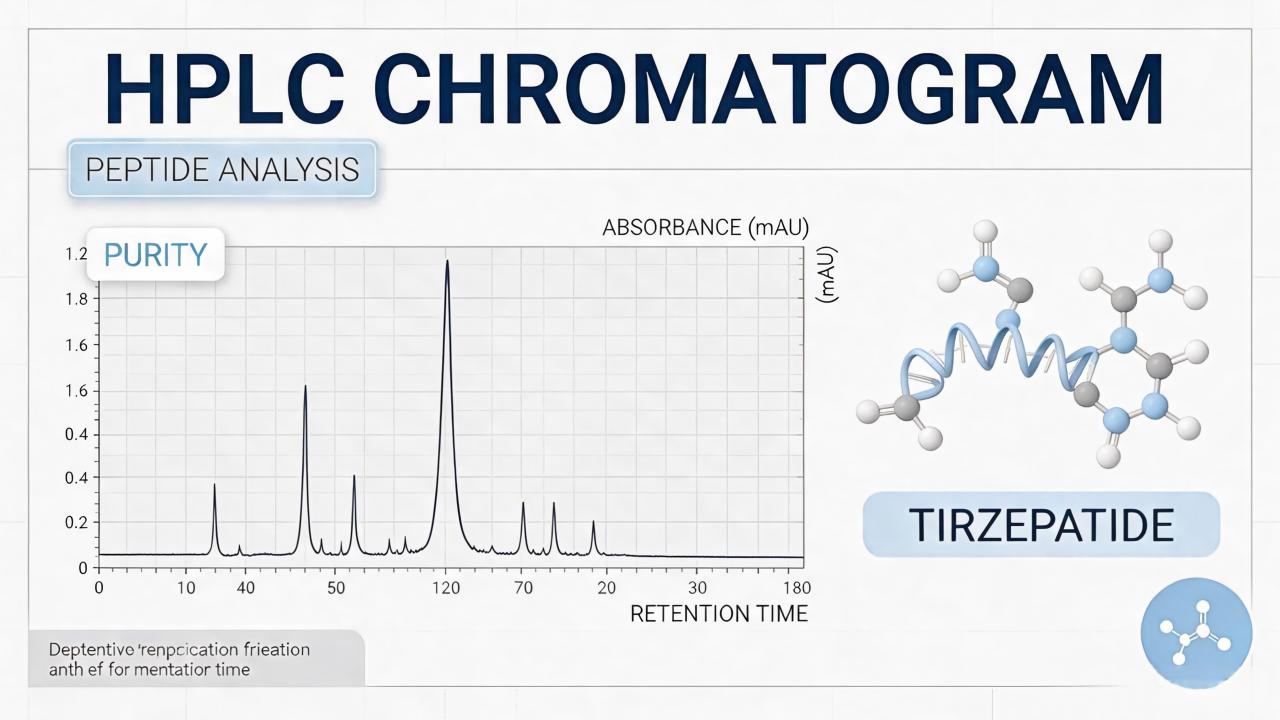
The NTS Laboratory Analysis Team has deeply explored the separation technology of modified peptides, established an HPLC-UV quantitative and qualitative confirmation system suitable for teicoplanin, and is capable of accurately distinguishing between deletion peptides, insertion peptides, oxidized peptides, and deamidated isomers. It can also qualitatively attribute trace related substances. The entire method has undergone validation for specificity, linearity, precision, and stability, and can be used for raw material release, formulation compatibility investigation, and forced degradation testing.
The laboratory is open for visits, and customers can enter the experimental area after making an appointment to observe the entire process of tilbro peptide sample pretreatment, sample injection and collection, and data review. Professors and doctoral researchers can communicate face-to-face about degradation mechanisms, and provide access to raw detection spectra and method validation materials to assist you in optimizing the synthesis and purification process and establishing internal control standards for your enterprise. Leveraging Hong Kong's geographical advantages, we provide rigorous and reliable tilbro peptide quality control and detection services to global peptide research and development partners.