News
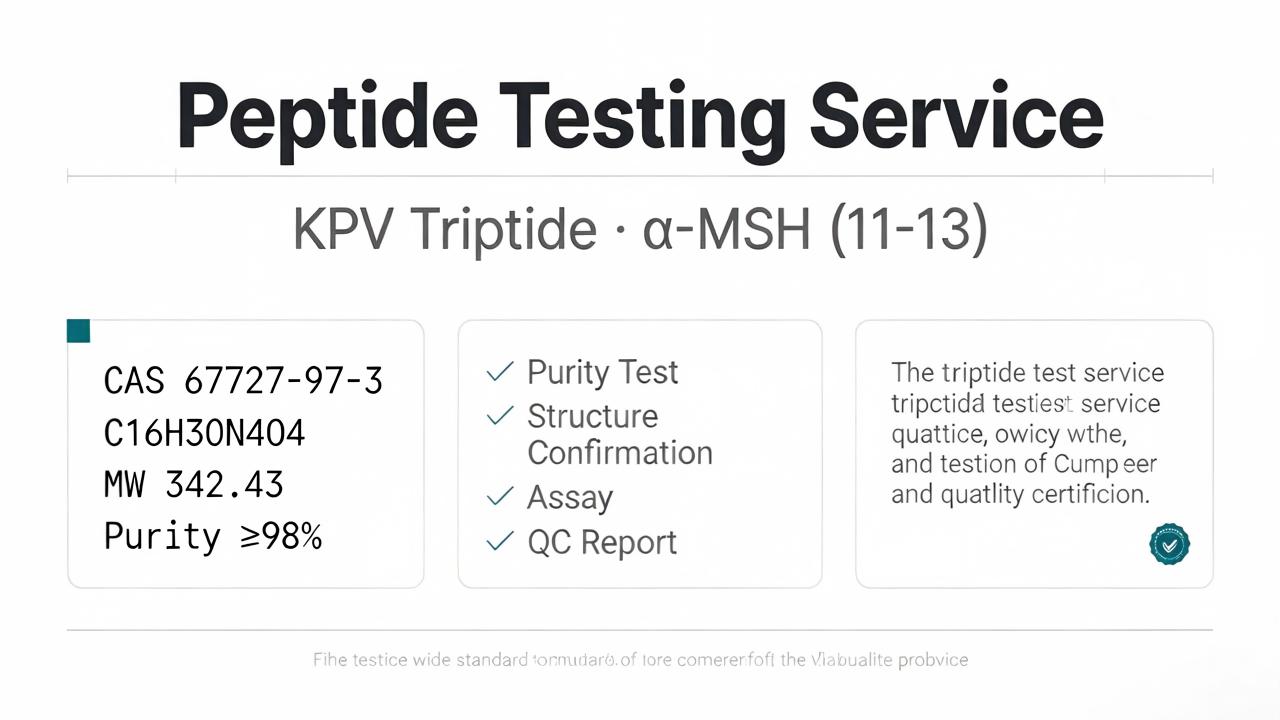
KPV|CAS:67727-97-3
α‑MSH (11‑13) free acid (KPV) is a classic tripeptide, widely used in skin care ingredients and inflammation mechanism research. This short peptide has strong polarity and weak retention, making it difficult to achieve effective retention using ordinary reversed-phase chromatography. At the same time, the sample is prone to interference from amino acids and dipeptide intermediates, and the distinction between free acid and salt forms is also a key point for quality control.
Led by a team consisting of professors and doctoral students specializing in peptide drug analysis, our laboratory team has established an HPLC detection method suitable for polar short peptides, coupled with UV qualitative analysis. This method can accurately determine the purity of free acid KPV, residual amino acids, and short peptide impurities, and distinguish between free acid and acetate forms. The method is suitable for cosmetic ingredients and scientific research-grade samples, and the data generated can be used for ingredient inventory inspection and formula development.
We offer open laboratory tours. You can make an appointment to visit our Hong Kong laboratory and witness firsthand the polar peptide pretreatment, chromatography method exploration, and qualitative and quantitative processes. Our PhD and graduate student teams can provide on-site explanations of the retention mechanism of short peptides, share detection SOPs and chromatogram files, adjust the pretreatment protocol based on your formula matrix, and continuously provide transparent and reliable detection services for the research and development of short peptide raw materials.